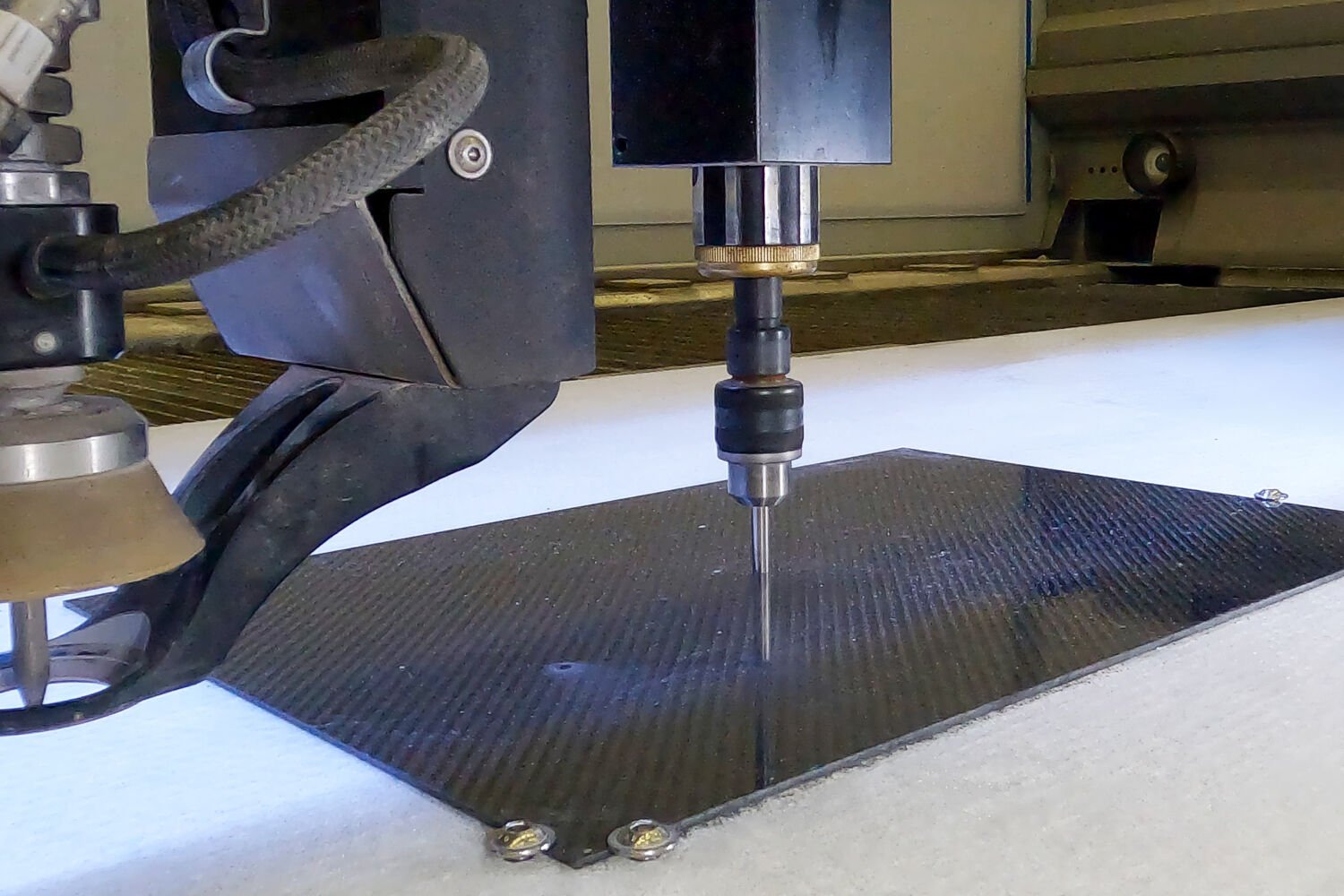


Choose mechanical pre-drilling in waterjet cutting!
Aerospace, automotive, marine, energy and advanced industry share the same need: to fabricate with sheets of composite materials such as carbon and glass fiber, while ensuring constant quality, structural integrity and competitive cycle times.
Abrasive waterjet cutting is a well-established technology for these industries, but the chosen initial pre-drilling strategy makes all the difference when it comes to ensuring cutting quality and repeatability.
Two approaches, one common aim
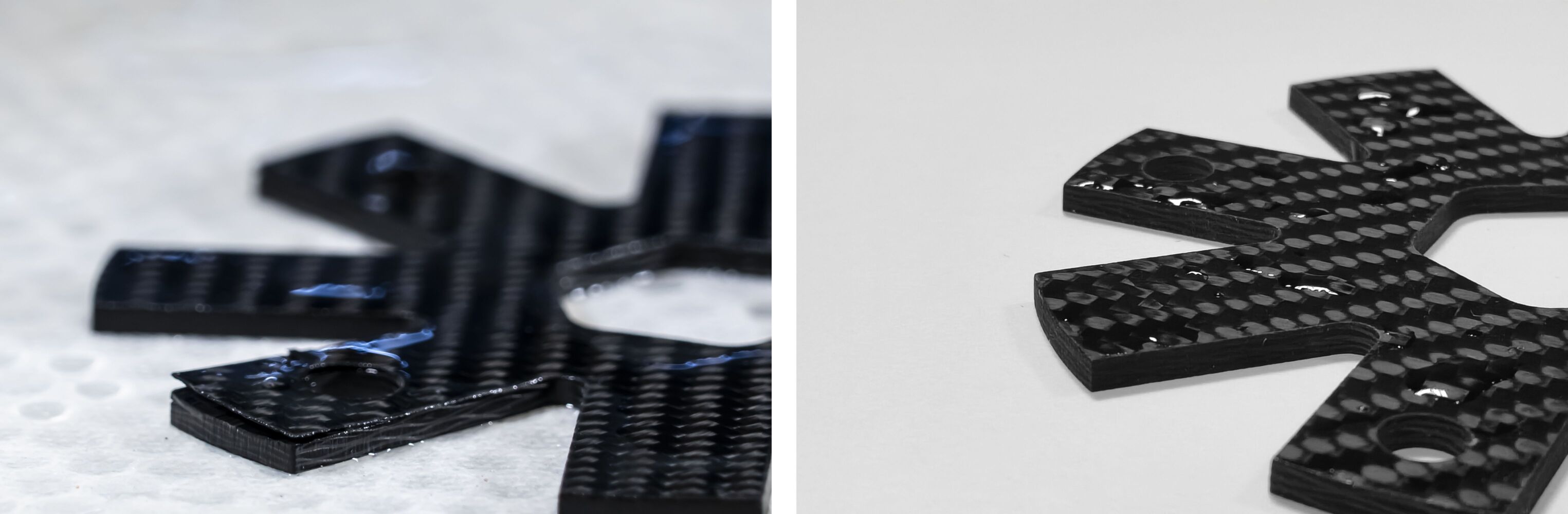
Both mechanical tool pre-drilling and low-pressure pre-drilling aim to prevent the onset of delamination before high-pressure cutting. Both work, but they do not offer the same long-term results and process repeatability.
Why choose mechanical pre-drilling: the 5 key benefits
1. Guaranteed repeatability
Mechanical drilling ensures a constant result, hole after hole, batch after batch. The process is controlled, stable, and independent of the variables typical of low-pressure jets.
2. Process reliability
Unlike low pressure pre-drilling, which does not always prevent the onset of delamination, a mechanical tool eliminates the risk from the start, protecting the integrity of the composite material.
3. Higher quality on critical materials
Carbon and glass fiber require absolute precision: mechanical pre-drilling prepares the material for waterjet cutting without internal stress or micro-damage.
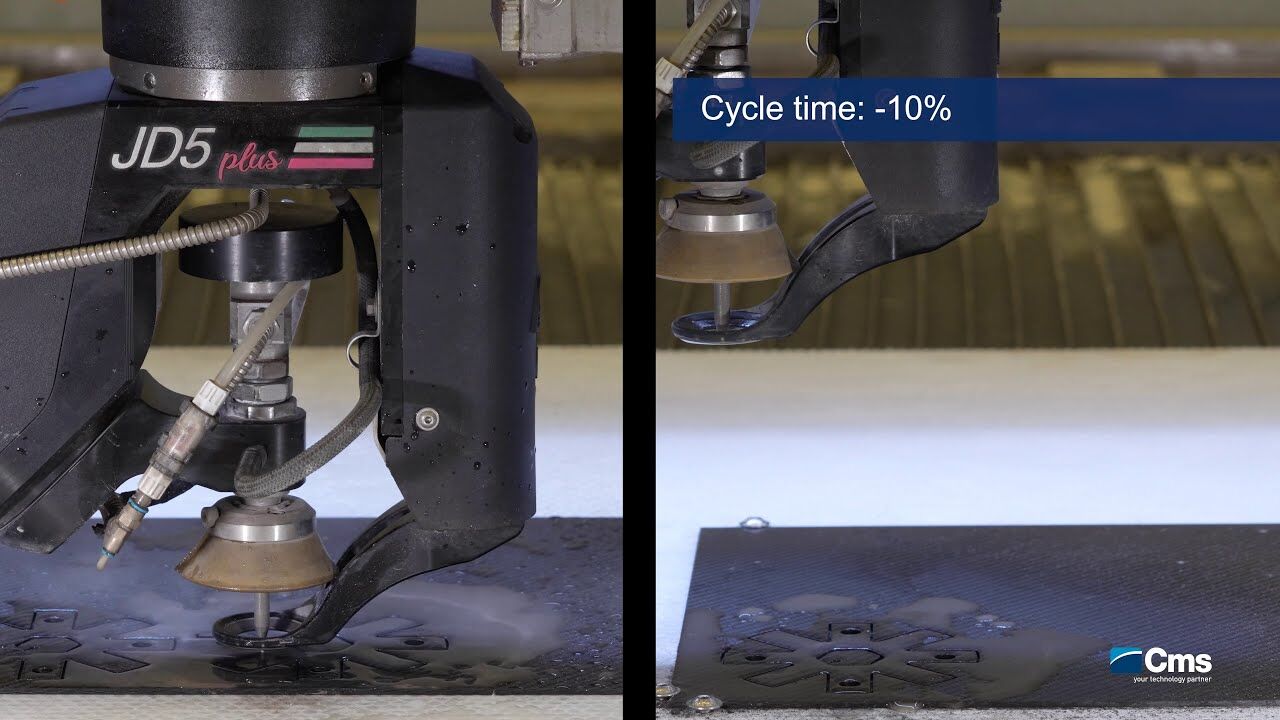
4. Shorter cycle time
Eliminating high pressure discharge times in the hydraulic circuit makes the overall cycle 10% faster than with the low-pressure pre-drilling strategy.
5. More efficient industrial process
Fewer variables, fewer uncertainties, and greater productivity. A solution conceived for those working with a view to industrialization and not just prototyping.